We are delighted to feature another guest post from David Coxon, Honorary Vice President of Tangmere Military Aviation Museum.
David writes:
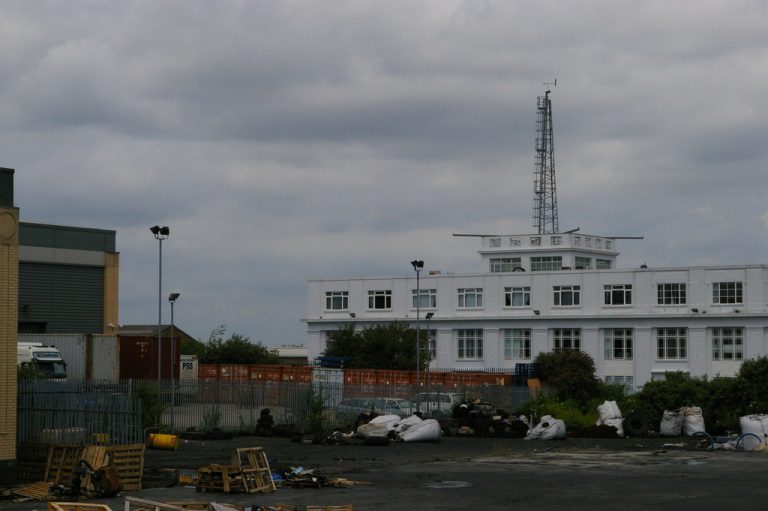
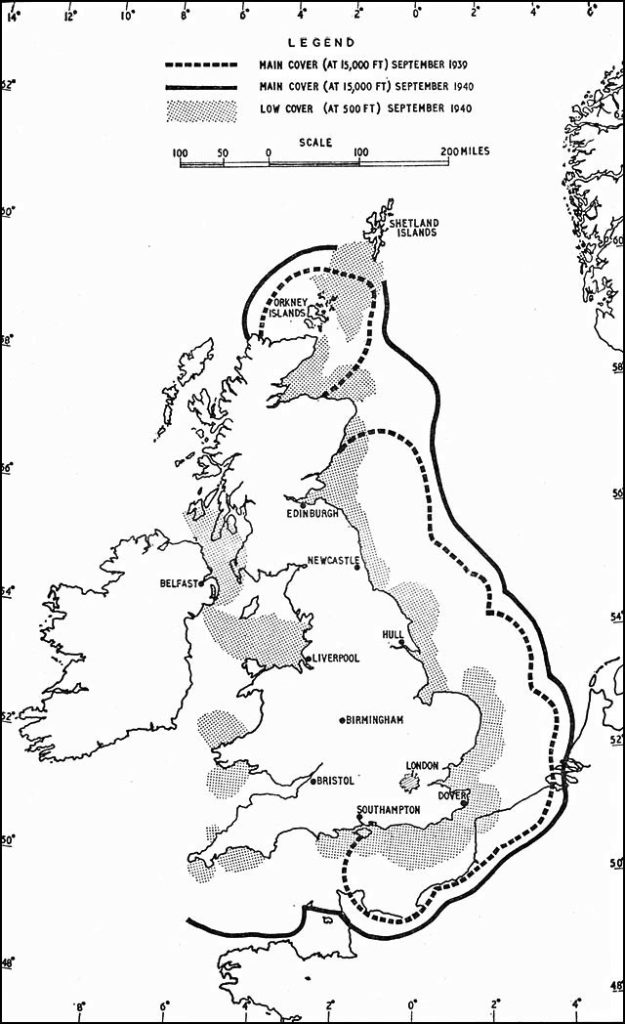
By early 1941 a Ground Control Interception (GCI) radar unit had been set up at Durrington near Worthing to assist night fighters, including those operating from RAF Tangmere, to intercept enemy bombers. At the radar unit the GCI radar antenna provided accurate height information and a motorised turntable allowed the antenna to sweep through 360 degrees at a constant rate. A ‘Plan Position Indicator’ (PPI) enabled the radar to be displayed in the centre of the radar screen with the aircraft ‘blip’ (radar return) displayed at the correct range and bearing from the radar. This presented a map-like overview of the air situation in real time. A fighter controller, sitting at the radar, could thus see both their fighter and target, thereby enabling the fighter to be vectored into the correct position for the radar operator in the aircraft with his Airborne Interception (AI) radar to take over and complete the interception. One of the most successful night fighter pilots was Wing Commander Thomas Pike.
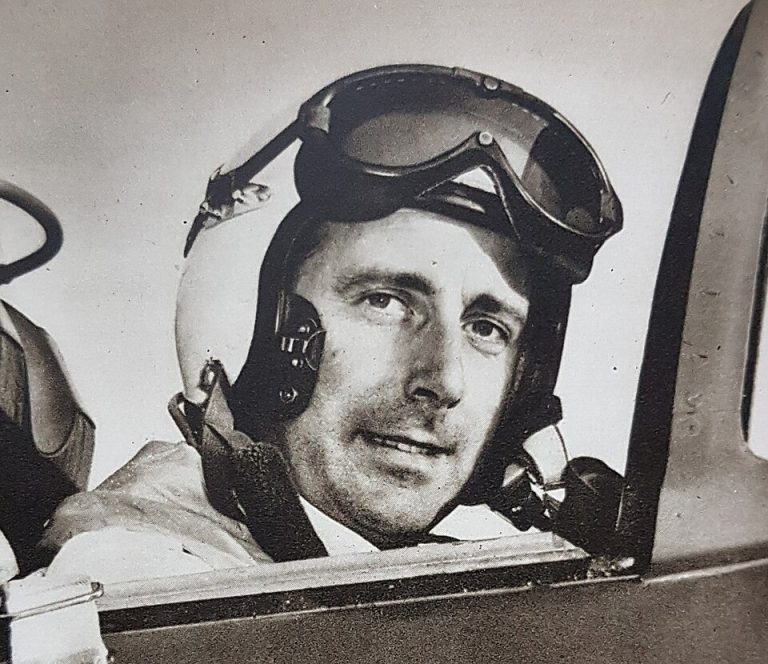
Following outbreak of hostilities in 1939 Pike served on the air staff where he was promoted wing commander before being posted in February 1941 to RAF Tangmere to command No 219 Squadron, a night fighter squadron that had been recently equipped with the latest AI radar equipped Bristol Beaufighters.
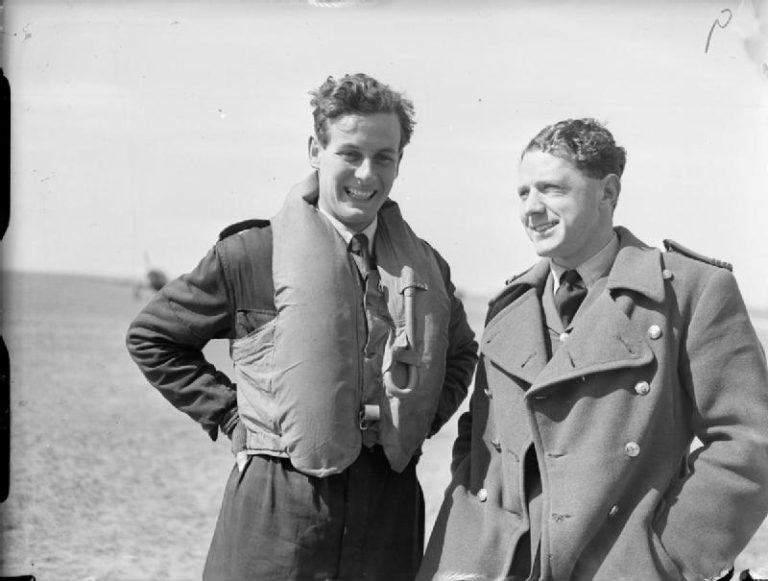
Before Pike’s appointment, the squadron’s performance had been disappointing. Setting an example on his first operational sortie in March 1941, with Flying Officer Duart as his navigator/radar operator, Pike shot down an enemy aircraft in the Guildford/Horsham area. Three nights later he shot down another enemy raider south of Beachy Head and on 16 April with Sergeant William ‘Terry’ Clark as his radar operator he shot down two more enemy aircraft. All these successes were achieved under the control of the Durrington GCI radar station. Pike learned that he had been awarded the DFC on 3 May 1941 when the station commander, Group Captain Woodhall, announced in the presence of others, including Wing Commander Douglas Bader, OC Tangmere’s Spitfire Wing, that Pike’s award was in recognition of gallantry displayed in flying operations against the enemy. That night he achieved two further successes, a Junkers Ju 88 shot down over Petworth and a Heinkel He 111 that crashed near Bognor Regis.
A week later Pike and his radar operator, Sergeant Austin, shot down a He 111 over Guildford. Two nights’ later Pike and Austin downed a Ju 88 south of Worthing and on 15 June, again with Austin, Pike gained his final success when he shot down a He 111 over the Channel south of Brighton. After his last sortie from Tangmere, Pike was awarded a Bar to his DFC having shot down seven enemy bombers and damaged one. At the end of June 1941, he left Tangmere for No 11 Group and later served as commanding officer of RAF North Weald followed by a posting to the Mediterranean theatre. At the end of the war he was serving as a senior staff officer at HQ Desert Air Force.
After the war, Pike remained in the RAF serving in senior staff positions. He became an air marshal on 1 January 1955 and in August 1956 became Air Officer Commander-in-Chief RAF Fighter Command. In this position he was promoted to air-chief-marshal and was present to take the salute at RAF Tangmere on 23 June 1958 when No 1 Squadron (the last Fighter Command squadron at Tangmere) paraded its standard for the last time. He later went on to become Chief of the Air Staff.
Marshal of the RAF Sir Thomas Geoffrey Pike GCB CBE DFC and Bar retired from the RAF in March 1967. He died at RAF Halton on 1 June 1983. One of his radar operators at Tangmere, Terry Clark DFM survived the war and died on 7 May 2020, aged 101, almost the last of the ‘Few’.
Post-script: Interestingly, when I was in my last year of my Air Traffic Control Officer cadetship I qualified in the summer of 1968 at the Gailes Radar unit (a former GCI unit) near Prestwick Scotland – we were still using a Type 7 primary radar – the same type as at Durrington in 1941!