We are delighted to feature another guest post from David Coxon, Honorary Vice President of Tangmere Military Aviation Museum.
David writes:
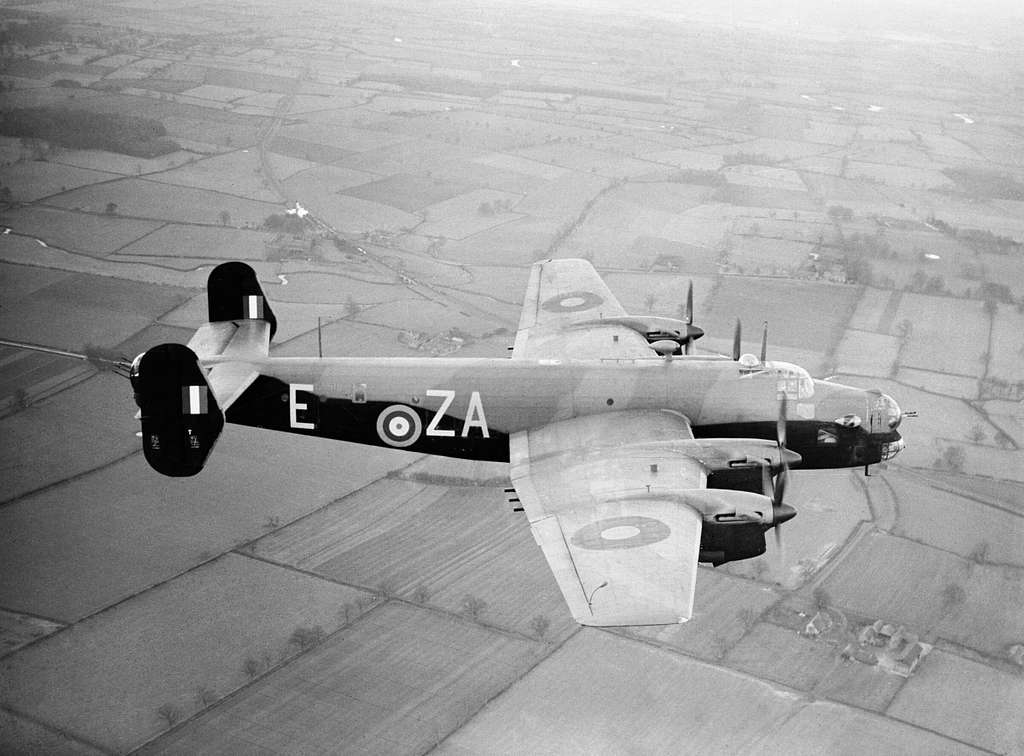
On the evening of 19 November 1943 a seven-man crew boarded a No 10 Squadron Halifax Mk 2A (HX181) at RAF Melbourne, Yorkshire. It was bitterly cold and fog was forecast. They had only flown back from a raid on Mannheim sixteen hours before. Grabbing their parachutes they scrambled through the small hatch into the aircraft. Their target was the huge I G Farben Chemical factory in Leverkusen, Germany. The captain of the aircraft was Flight Sergeant Ben Holdsworth, a 23 year old from Leeds who had worked for the GPO in Civvy Street. Despite being in a reserved occupation he chose to volunteer for the RAF. A talented pilot, he had recently flown the four engine Halifax back from a raid on Peenamunde, with its two starboard engines feathered.
Twenty year old Flight Sergeant Clive Telfer was the Navigator who had joined up as soon as he had turned eighteen. The Bomb Aimer was 31 year old Sergeant Jim Oudinot, a keen poet and writer. He had been resident in British Guyana for some years but elected to return to Britain to enlist. Married, his wife was expecting in five months’ time their first child. Twenty two year old Welshman Sergeant Robert Downs was the wireless operator who came from a large family of ten. The flight engineer, young Sergeant Jim Steel, was on his first flight. He had trained at RAF Halton, passing out as the RAF’s youngest flight engineer. Aged nineteen, he was excited at last to be airborne. Sergeant Charlie Smith, known as ‘Little Charlie’, was the tail gunner. The mid-upper gunner was Australian Flight Sergeant John Harper. He had worked on the railways before enlisting in April 1943 and aged 28, was the only member of the crew to have become a father.
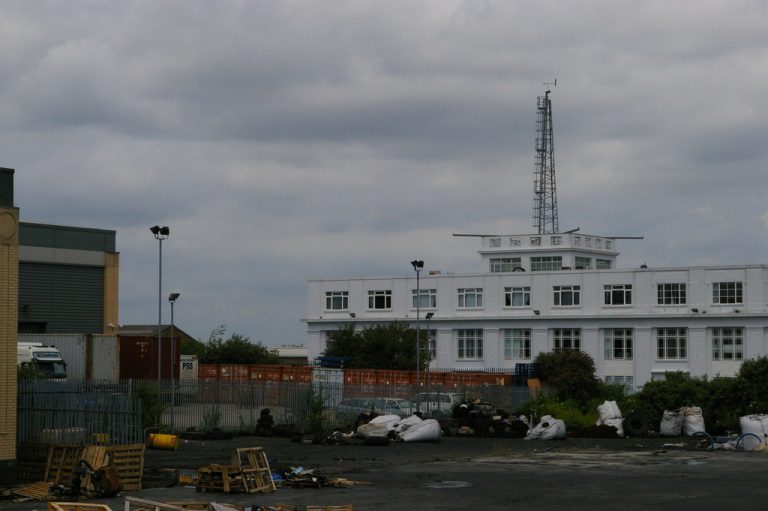
During the raid on the chemical factory their Halifax sustained considerable damage. Rather than bailing out, they elected to try and return to England, hoping to make an emergency landing on crossing the coast. Coasting-in they requested to make an approach to RAF Ford but were denied because a B17 Flying Fortress had blocked the runway. They flew on to RAF Tangmere. Several eyewitnesses saw the Halifax making an approach to Tangmere’s North-South runway. The aircraft was being flown erratically indicating perhaps a member of the crew other than the pilot was attempting to land. An RAF Chaplain who was in the control tower at the time said that they tried to ‘talk’ the Halifax down.
The aircraft made four or five attempts to land and on the final attempt it came in too low, heading straight for the tower. Thankfully for those inside the building, the aircraft veered away but crashed into a General Purpose Belfast Truss Hangar behind. As the Halifax made impact a massive explosion ensued and fire quickly spread through the hangar. It was impossible to try and save the crew because of the intensity of the fire. The Halifax’s remaining ammunition started to go off and 6 Typhoons, 3 Spitfires and 2 Lysanders were destroyed.
News of the accident was supressed, no inquest was held and a ‘news blackout’ was put in place. The remains of the crew were returned to their families for burial and the site was cleared and levelled. As time went by, no one remembered HX181 and its brave crew until a memorial on the old airfield was unveiled on Friday 16 August 2019 by Susan Pyper, the Lord Lieutenant of West Sussex. Family members of the crew who lost their lives laid wreaths and later were present in the Museum’s memorial garden when a plaque listing the crew members of the Halifax was unveiled.
Aly Etherington, a great niece of one of the crew, worked tirelessly to get permission for a memorial to be placed at the location of where the aircraft crashed, close by the control tower.