We are delighted to feature another guest post from David Coxon, Honorary Vice President of Tangmere Military Aviation Museum.
David writes:
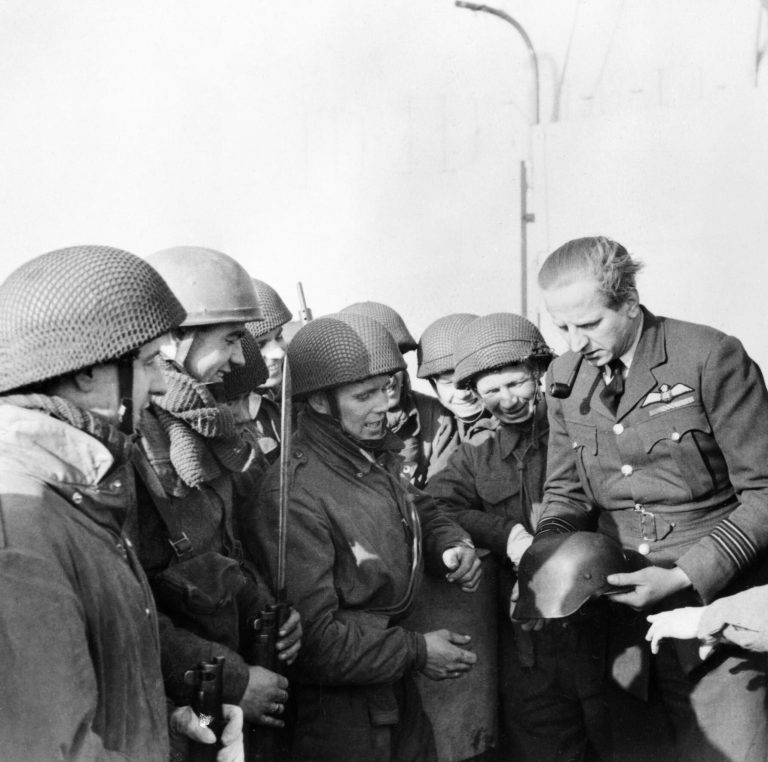
Throughout 1943, Squadron Leader Hugh Verity commanded No 161 Squadron’s ‘A’ Lysander Flight, tasked with inserting and picking-up spies from farmers’ fields in occupied France. These clandestine flights, flown from RAF Tangmere, were conducted in moonlight (two weeks before and after the full moon).
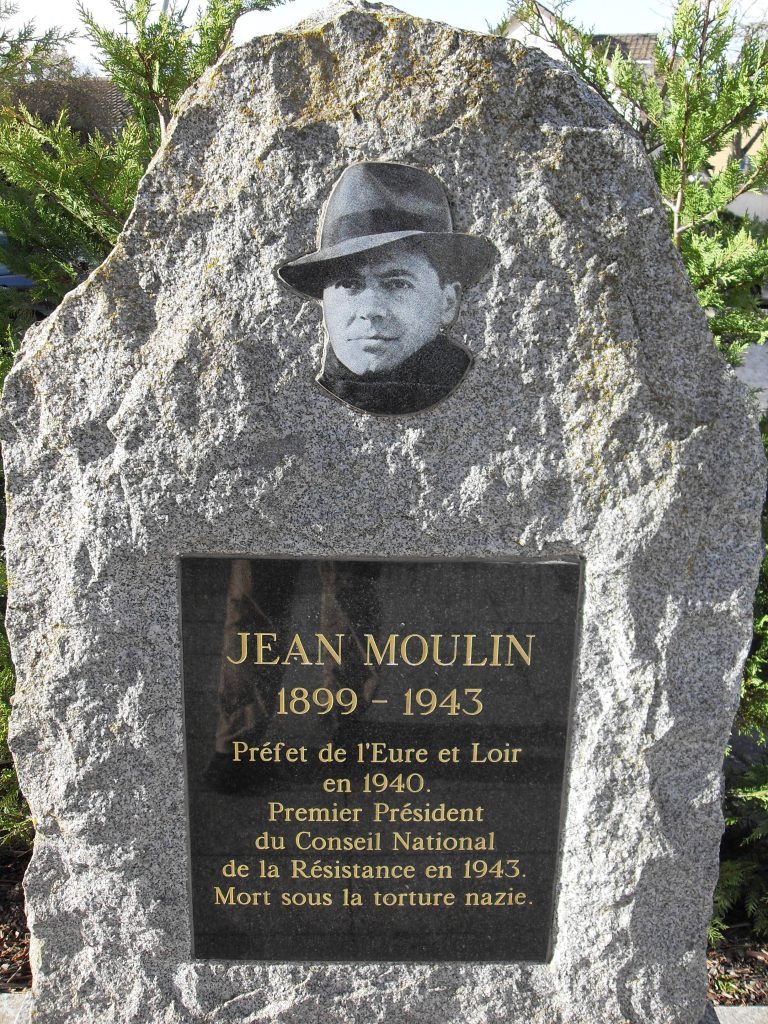
On the night of 24/25 February 1943 Verity nearly killed himself and his passenger Jean Moulin, General de Gaulle’s coordinator of resistance networks in the southern half of France. In his book ‘We Landed by Moonlight’ (Crécy, first published by Ian Allan Ltd in 1979) he described what happened that night.
The operation was called ‘Eclipse’ and Hugh’s Lysander for the flight was ‘D for Dog’. His only passenger (known to the pick-up pilots as ‘Joes’) from Tangmere to a field south of the River Loire near Bourges, was a Frenchman. He was wearing an ordinary suit, overcoat and felt hat but had a scarf which did not entirely cover scars on his neck. After the war Verity concluded that his ‘Joe’ was the great Jean Moulin.
The forecast for the flight indicated some risk of fog but a probability of a fine night. Due to the weather conditions on the outbound flight, Verity had to navigate by dead reckoning. On reaching the Loire, he was in solid fog with no visual reference to the ground. He set course on his final leg to the target field, flying accurately but soon realised there was virtually no hope of a clear patch over the landing field. He sadly turned for home and after flying for about two hours in fog and over low stratus cloud he found when approaching the North coast of France that he was off track and near Cherbourg. He attracted a searchlight and to shake off the bluish light he turned and twisted in a violent dive.
With the aid of homing bearing he eventually reached Tangmere which, unfortunately, was covered with fog that had formed during the four hours since he had departed. The top of the fog was 800 feet above the ground; he asked the tower what the landing conditions were and their reply was, “Let down to 300 feet and if you cannot see the flares, we’ll think again – we’re lighting Money flares for you” (very bright flares to mark the runway edges). Verity asked the tower to put up two searchlights, one north and one south of east/west runway to assist determining its location. These two searchlights made large pools of light on top of the fog and saved Verity from making a ZZ instrument approach which required repeated voice transmissions from the control tower to obtain bearings. The searchlights gave Verity a very accurate idea of what part of the fog to let down into. Flying just above the fog he placed himself between the pools of light and flew a very accurate race-track circuit (straight parallel legs with a semi-circle at each end). After turning towards the point between the two light pools he let down on instruments through the fog to 300 feet. He then saw the glare from one of the Money flares below him, to the side – then there was another but he realised he was not on the correct runway heading and that he was too high. He commenced a go-around. After repeating the procedure eleven times, Verity was beginning to tire and decided that he would make a landing on his twelfth attempt.
Down he went, checking his speed, rate of descent and heading, using the artificial horizon to keep his wings level. Suddenly there was a tremendous glare in the fog from one of the flares. Instinctively, Verity pulled the stick back and cut the throttle. He was now in a configuration for a three point landing, not realising he was 30 feet too high. The Lysander, now stalled, fell with a tremendous crack as the ‘unbreakable’ undercarriage beam snapped off. The tail went up to an angle of 45 degrees as the aircraft pitched forward and skidded along on three points; the engine housing and twisted propeller blades leading, followed by the broken stumps of the undercarriage legs.
Fortunately the Lysander did not catch fire. Verity turned off the petrol and ignition and concerned about his ‘Joe’ stuck up high in the rear cockpit, he climbed out of his cockpit and walked to the rear of the aircraft to find Moulin sliding his roof back and climbing out. Verity helped him jump to the ground and after what had been a disastrous trip, he apologised profusely to Moulin in his best French. Moulin could not have been more charming and even went to the lengths of thanking Verity for “a very agreeable flight”.
Jean Moulin was successfully flown back to France by Lysander pilot John Bridges on the night of 19/20 March. He was captured by the Gestapo three months later and after interrogation in Paris died when being transported to Germany. Hugh Verity went on to complete his successful tour with No 161 Squadron and survived the war.