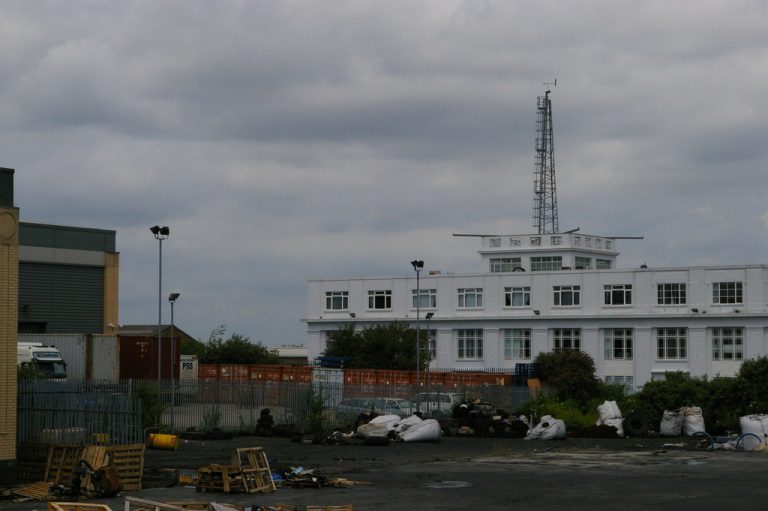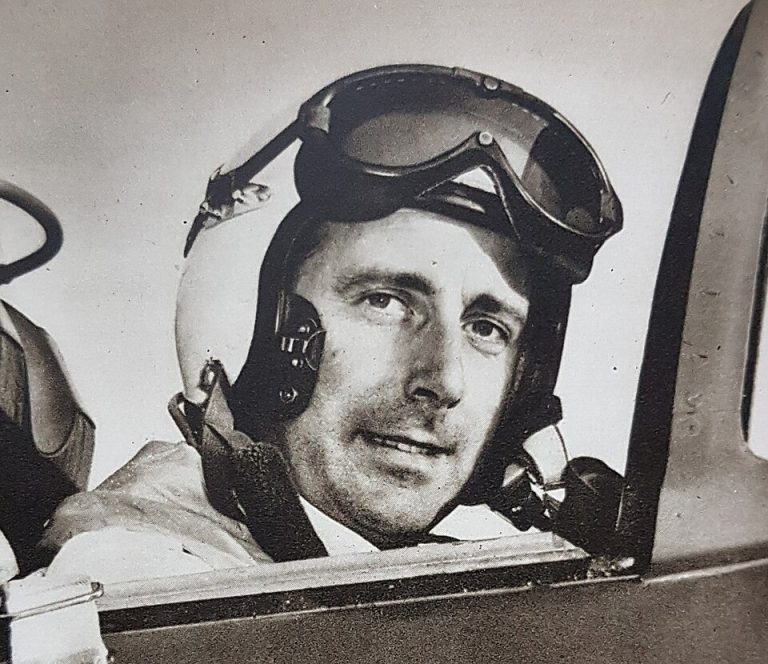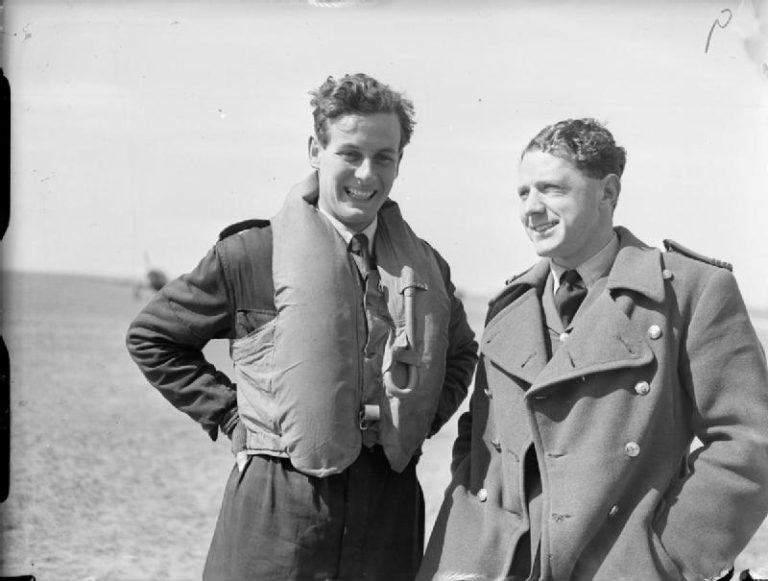
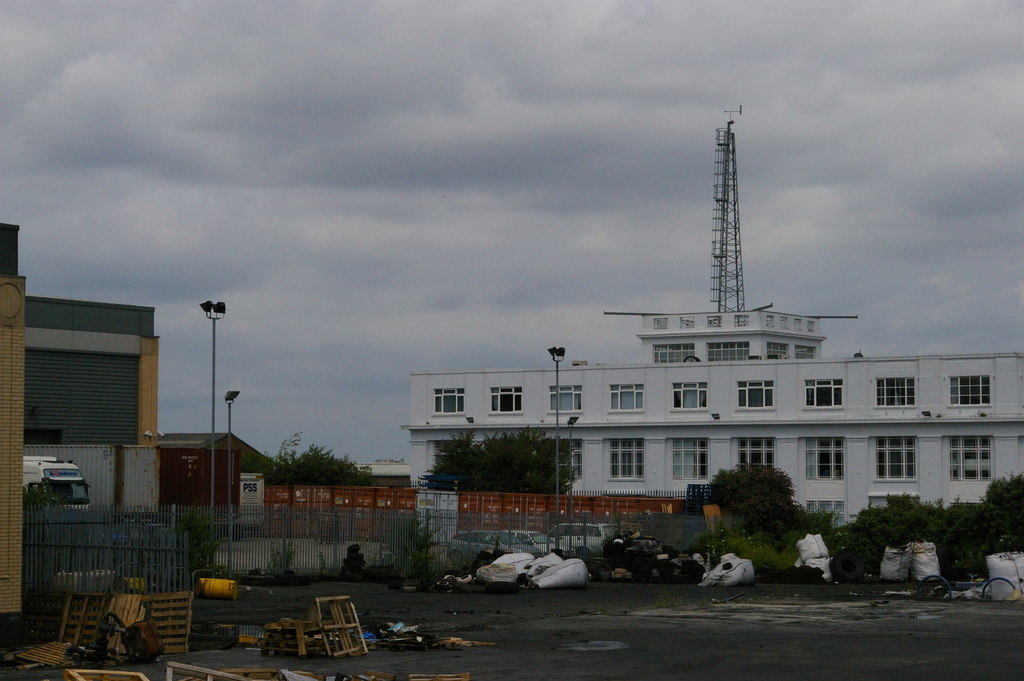
We are delighted to feature another guest post from David Coxon, Honorary Vice President of Tangmere Military Aviation Museum.
David writes:
Air traffic control (ATC) began in the UK in the 1920s at Croydon Airport to ensure the safe, orderly and expeditious movement of civilian airliners on and around the airfield and between London and the continent.
International flights by regular air transport had commenced in August 1919 with a daily service between the London air terminal, then at Hounslow Heath and Paris using a day bomber converted to carry two passengers. The same year, flights were also started to Brussels and Amsterdam. In 1920 Croydon replaced Hounslow as the London air terminal and pilots began to communicate with Croydon for information they required such as the weather at their destination airport. Two years later Civil Aviation Traffic Officers (also known as Aerodrome Officers – AOs) were appointed and following two near misses in the same year, the Department of Civil Aviation decided that all support services at Croydon should be centred on an a small wooden control tower with a CATO and a wireless operator to enable communication with wireless equipped aircraft during the hours of flying. Also in 1922, direction finding equipment was fitted to radio receivers at Pulham in Norfolk. This equipment, with Croydon’s D/F equipment, enabled the CATOs to pinpoint an aircraft’s position. When, later, receiver aerials at Lympne were fitted direction finding equipment, aircraft positions could be plotted by the Croydon CATOs to an accuracy of two miles.
A 1922 Notice to Airmen (NOTAM No 62) introduced aerodrome control at Croydon after discussions between pilots and control staff. The NOTAM stated:
- Taking Off – all pilots in charge of aircraft about to leave the aerodrome will obtain their order of priority in taking-off from the CATO. Pilots about to take-off will await a signal from the CATO to do so. On receiving the signal they will take-off without undue delay
- Landing – All pilots arriving at the aerodrome will make at least one complete left-handed circuit before landing and will continue this circuit until, in their opinion, landing can be affected without risk of collision
- Landing and taking off in calm weather – all machines will take-off and land on bearing between NW and W. Calm weather will be indicated by a white ring on the aerodrome in front of the traffic office (control tower)
The traffic officers (controllers) now had authority to decide the order of take-off but still had no control over landing aircraft. Permission to take-off, issued by a light signal, could only be refused if the controller knew that another aircraft was approaching the aerodrome in bad weather; the departing aircraft would then have to wait until the incoming flight had landed.
In 1928 new buildings and a control tower were opened at Croydon and in this year six thousand aircraft made wireless contact with the airport. Inside the control tower the wireless operators were separated from the controllers by a glass partition and hatch through which written ‘Q’ code messages could be passed (each message consisted of three letters beginning with the letter ‘Q’, thereby reducing the length of each message). Controlling aircraft away from the aerodrome (area control) was achieved by using an aircraft’s position obtained by direction finding information when a pilot transmitted a message or by the estimated position, knowing the aircraft’s known speed and direction. A map and pins were used to display this to the controller and should he see a confliction he would pass proximity warnings to both aircraft to alert the pilots to be extra vigilant and to keep a good lookout. By 1933 separate inbound and outbound routes were used and the first Aerodrome Control Zone was established to ensure separation between aircraft. Bad weather conditions, such as poor visibility or low cloud (known as QBI conditions) would prohibit aircraft that could not communicate by wireless to enter the zone. A system of ATC Communication Areas was also introduced, each with an aerodrome that had a radio station to work aircraft. When an aircraft passed from one Communication Area to another the pilot was required to signal his position and request to change wavelength. At Croydon in the late 1930s it was possible at times to have as many as 25 aircraft on the 900 metres frequency at the same time.
To assist inbound aircraft flying in cloud, controllers at Croydon, having passed the barometric pressure, would pass D/F bearings to ‘home’ the aircraft overhead the aerodrome. When engines were heard the controller would transmit a message such as ‘MN’ (motors north) and when overhead ‘MO’ (motors over). The pilot on receiving this observation would execute a timed descending turn into the circuit. An early instrument approach, known as the ‘ZZ’ letdown procedure was used to assist the pilot to land using D/F bearings. When the controller considered the inbound aircraft to be well placed for a landing the message ’ZZ’ was signalled. If not positioned well a ‘JJ’ signal was passed advising the pilot to overshoot and climb away. Airfield lighting for night operations was basic with flare paths delineated by kerosene flares, known as ‘goosenecks’, laid out into the forecast wind direction.
Pilots crossing the channel to and from the continent were often concerned about the reliability of their engines and the prospect of having to make a ditching in the sea. In 1923 the distress call ‘Mayday’ was conceived by Frederick Stanley Mockford, a senior radio operator at Croydon. He proposed a distinct, easily understood phonetic term for a voice radio transmission to advise that an aircraft was experiencing a serious emergency requiring immediate assistance. He chose ‘Mayday’, the English phonetic equivalent of the French phrase ‘m’aider’ (short of venez m’aider – come help me). An example of when ‘Mayday’ was used was on the 17 June 1929. An Imperial Airways twin-engined HP W10 airliner (GEBMT) flying from Croydon to Paris suffered engine failure over the English Channel about three miles east of Dungeness. The number of passengers and crew on board was 13, eleven of whom were fare paying passengers. The pilot, Captain A O D Brailli attempted to make a forced landing at Lympne aerodrome and notified Croydon by wirelessing ‘Mayday’. Unfortunately, height was rapidly lost and the aircraft was forced to ditch in the Channel. The pilot and mechanic escaped with four other passengers seated in the tail section but seven of the passengers seated in the front of the aircraft were drowned.
By 1939 Croydon was the busiest airport in Europe with about 50 Continental schedules each day. Control responsibility in the control tower had been divided firstly, to an Area controller with a wireless operator working closely with D/F stations at Croydon, Lympne and Pulham and secondly to a Local controller and another operator handling the movements of aircraft on the ground and in the air within sight of the tower.
At the outbreak of war in September 1939 civil air traffic control was confined mainly to safety services for the few aerodromes used for civil use. Many of the trained civilian controllers such as E Vincent Miller, Charles Kyrke -Smith, C A Robinson, L H T Ashburner and Jimmy Jeffs (the first licensed controller) were transferred to the RAF and helped form the RAF Flying Control Service. Jimmy Jeffs went on to have a distinguished ATC career. During the war he was asked by the United States to lead the establishment and organisation of the North Atlantic airspace, so important in the formation of the United States 8th Army Air Force in the UK. Jimmy, as a group captain, was also responsible for ensuring the necessary air traffic services were in place for Winston Churchill’s visits to Algiers and Malta. In 1950 he was appointed airport commandant at Prestwick and seven years later he became Heathrow airport commander, a post he held until his retirement in 1960. Awarded CVO, OBE and the US Legion of Merit, Jimmy died in 1996.