We are delighted to feature another guest post from David Coxon, Honorary Vice President of Tangmere Military Aviation Museum.
David writes:
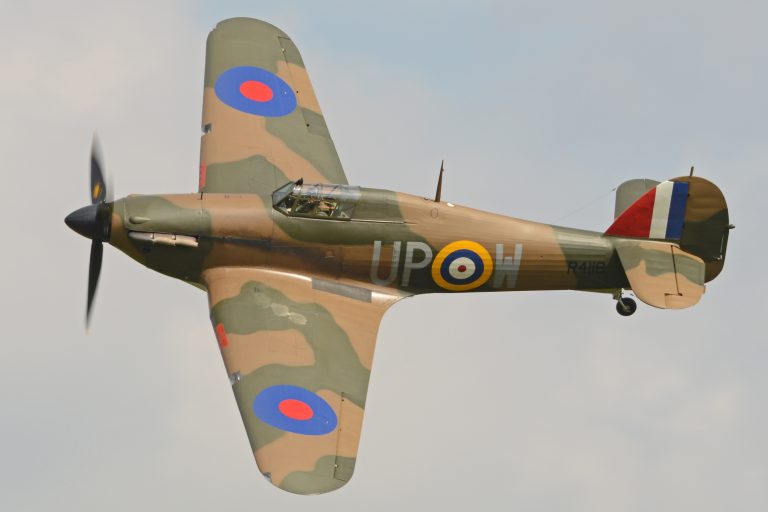
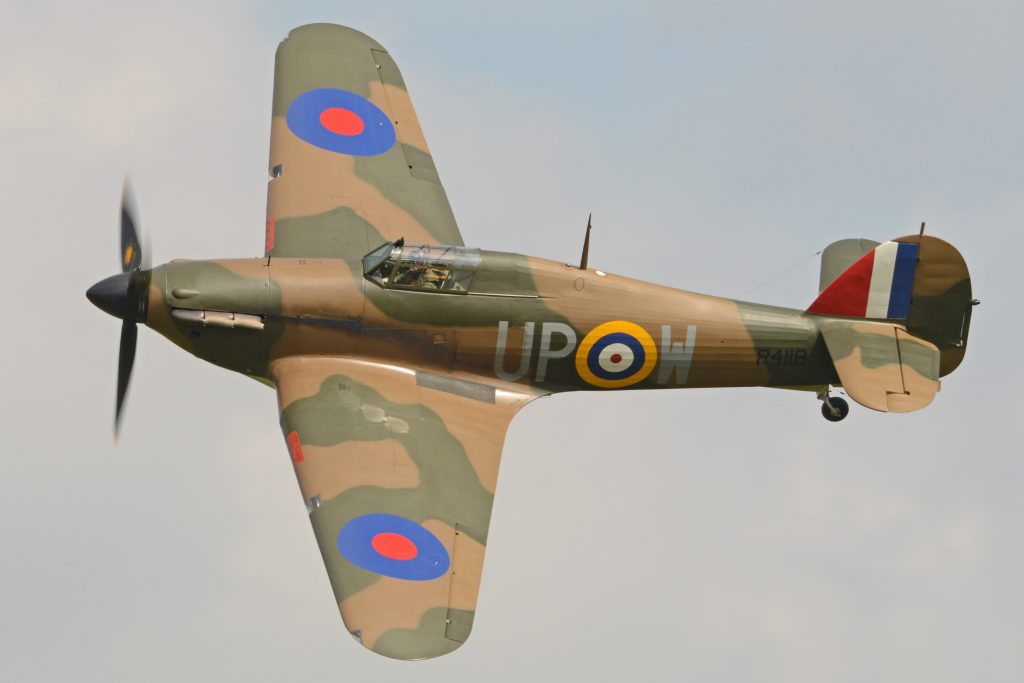
Sergeant Lesley Gordon Batt, RAFVR joined the Hawker Hurricane MK 1 equipped No 238 Squadron based at RAF Middle Wallop on 21 May 1940. On 21 July during the Battle of Britain, Batt shard in the destruction of a Dornier Do17 enemy bomber and on 8 August claimed a Messerschmitt Bf 109 shot down. On 13 August (the German ‘Eagle Day’) Batt’s squadron was ‘scrambled’ mid-afternoon from Middle Wallop when a large formation of enemy aircraft was detected by radar over the Cherbourg peninsula.
Batt described in his book ‘Scramble – a flying memoir of One of the Few’ how his squadron was climbing towards Portsmouth to gain height and seeing the number of enemy aircraft over the English Channel to be a hundred plus. His squadron was ordered to split into two flights and attack the enemy. He records that he was attacked by Bf 109s which cut him off from the rest of his flight. He then saw a gaggle of twin-engined Bf 110s below him and he turned towards them and dived to attack. In his dive his aircraft was hit and realising he may have to bail out he went through the cockpit drill to escape including opening his cockpit hood. There was no sign of fire but his eyes were gummed up by oil covering his face. He managed to open his eyelids and saw that his aircraft was going down vertically with its engine streaming coolant. He manged to pull out of the dive and deciding to attempt a forced landing as he was over land, he closed the hood and looked around for a suitable field. All looked very small but after selecting one of them that he could land into wind, he made his approach and landed wheels-up in a field of barley. The aircraft’s air scoop kept digging in as the Hurricane bounced along the ground, eventually stopping with a sudden jolt. Butt was able to heave himself out of the cockpit uninjured and moved away to a safe distance. Soon, Home Guard volunteers arrived with rifles held above their heads as they approached across the barley field. Unsure that they would recognise him to be a British pilot, Batt put his hands up.
He had forced landed at Eartham, West Sussex, just north of Fontwell Racecourse and was eventually taken to Tangmere, the nearest RAF station, looking a sorry sight with his uniform, face and hands covered in oil and dirt he made his way to the Station’s Watch Office to report what had happened and to ask for Middle Wallop to be informed of his absence. He was told to “hold tight to await being picked up”. In his book he said he had no knowledge of RAF Tangmere but found his way to the Sergeant’s Mess to clean himself up. He managed to scrounge breakfast and set off back to the Watch Office. However, on his way he met the Station Warrant Officer who said, “Sergeant, where is your hat?” Batt was unable to remember exactly what his reply was but recalled that it was not polite. The Warrant Officer was opened mouthed and speechless. He doubts that no other sergeant pilot had ever spoked to a Station Warrant Officer in this manner and got away with it. Batt quickly carried on to the Watch Office to await his lift back to Middle Wallop but later informed his commanding officer of the Warrant Officer incident to cover himself. His CO raised a smile and Batt heard nothing more.
Lesley Batt survived the war having continued serving with No 238 in 1941 and as a flying instructor back in Britain in 1942. He was commissioned in March 1943 and flew Hawker Typhoons with No 198 Squadron later in the war. He was released from the RAF in 1945 with the rank of flight lieutenant and remained in the RAFVR until 1959.
The Watch Office (Tangmere’s early Control Tower) was destroyed by enemy bombing on 16 August 1940, two days after Batt was picked-up to return to Middle Wallop. Lesley Batt died on 4 February 2004.
This article is based on an article written with permission of Lesley Batt published in the Tangmere Military Aviation Museum’s Spring 2002 ‘Talking Tangmere’ magazine.