We are delighted to feature another guest post from David Coxon, Honorary Vice President of Tangmere Military Aviation Museum.
David writes:
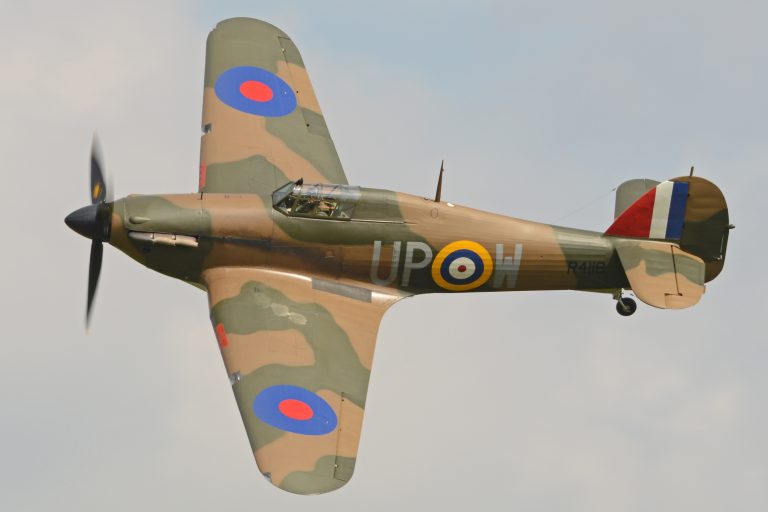
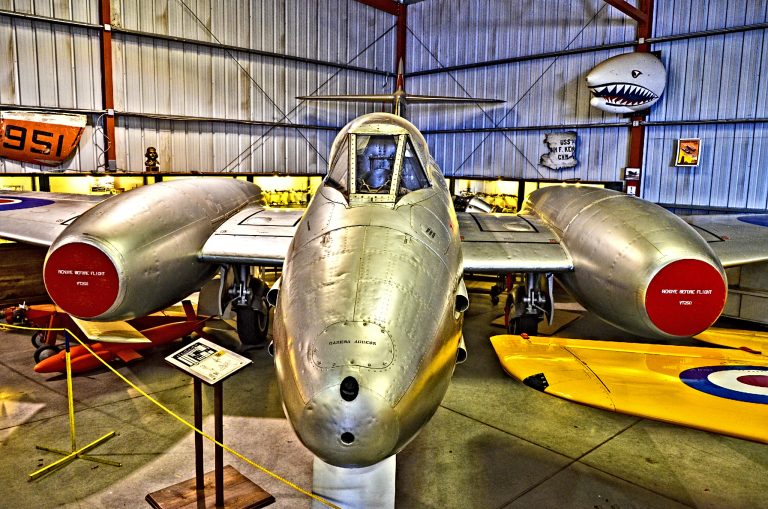
In September 1946, No 1 Squadron learned that its Spitfires were to be replaced by Meteor Mk 3 aircraft. This jet powered aircraft could fly at 500 mph at 30,000 feet and climb at 3,000 feet per minute. By the end of the year No 222 Squadron arrived with their Meteor Mk 3s to form the Tangmere Wing, the two squadrons being joined in 1947 by No 266, a third day fighter Meteor squadron. In May 1948, No 1 received the first Meteor F4s and on11 February 1949, No 266 Squadron became No 43 Squadron.
In 1950, the RAF decided to base only one day fighter and one night fighter squadron on each of the Fighter Command bases and in November 1950 No 43 Squadron was replaced by No 29 Squadron with its Mosquito NF 36s. These were replaced with Meteor NF 11s in August 1951. During late 1950 No 1 Squadron changed its Meteor F4s for the new Meteor F8, equipped with up rated Derwent engines and a redesigned tail unit to give better handling characteristics. In 1953, with the arrival of the Meteor F8 and the deteriorating political situation between the West and the Soviet Union, more construction was undertaken on the airfield. Operational Readiness Platforms (ORPs) to enable Meteors to be held at the end of the runway to facilitate any quick reaction required, were built at the ends of the main NE/SW runway (07/25) and a large hard standing was laid in front of the hangars.
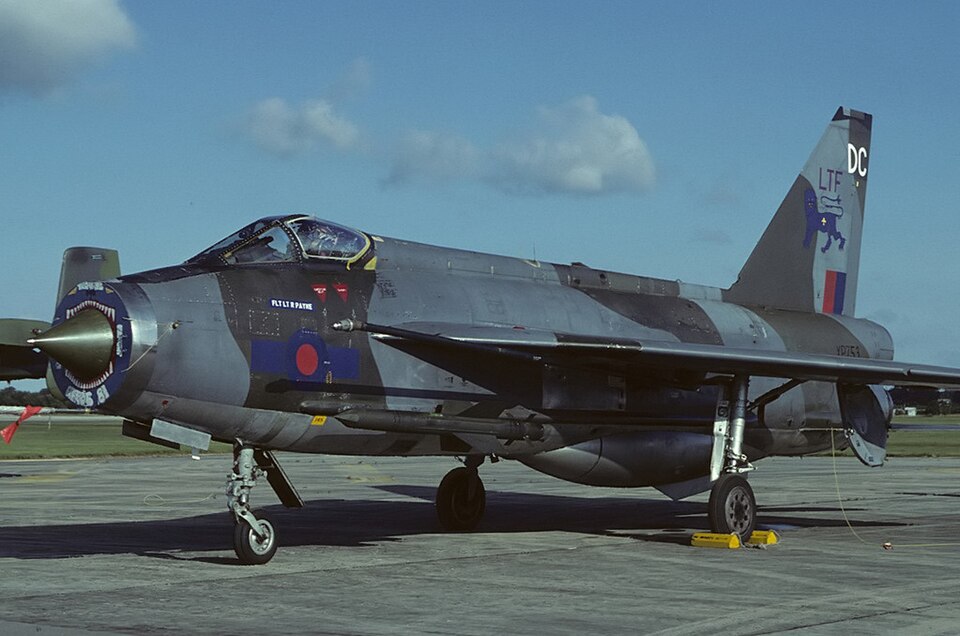
By the end of the 1950s it became clear that the aerial threat to the UK was from the Soviet Union and required a new fighter aircraft capable of speeds twice the speed of sound; the English Electric, later British Aircraft Corporation (BAC) Lightning. During the 1960s, the last decade of RAF Tangmere before its closure in October 1970, the UK’s ground radar system consisted of several Master Radar Stations (MRS) supplemented by radar sites with no control capability. Each of the major Lightning Quick Reaction Alert (QRA) airfields had a dedicated MRS which was required to maintain a Recognised Air Picture (RAP) in its own area of responsibility. The MRS passed the information to the UK Air Defence Operations Centre at RAF High Wycombe. Here, the complete picture, known as the UK Air Defence Ground Environment, was shared with adjacent NATO and other friendly countries.
Each Master Radar Station was equipped with a Type 80 search radar and ‘nodding’ height finder radars. The normal internal configuration of a MRS comprised an underground main operations room with a sunken well containing a plotting table showing the projected radar picture. Around the operations room there were smaller rooms (called cabins), each with their Interception Controller (IC) consoles fed by raw radar data from the surface radar antennas.
The Interception Controllers when controlling BAC Lightning interceptions used standard approach tracks to the target, identified by the number of degrees through which the Lightning would turn to roll out behind the target on the same heading at a range of about two miles. For example, when carrying out a ‘90’ against a subsonic target, the IC would aim to have the fighter approach the target on a heading such that the target would cross the Lightning’s nose at a range of five miles. At this point the turn of 90 degrees would be ordered e.g. ’port 240’ to achieve an Airborne Interception (AI) or a visual contact (VISIDENT). The call ‘Judy’ from the fighter indicated the pilot was able to complete the interception with no further help required. Fighter controllers used a small plastic overlay, marked with angles and ranges (see photograph) to assist them in determining the headings to intercept the target.
The Soviet long-range bombers, mainly the slow Tupolev Tu-95 ‘Bear’ and Myasishchev M-4 ‘Bison’, when intercepted by RAF Lightnings over the North Sea, were mostly on airborne surveillance missions. During interceptions, Tu-95 tail gunners typically kept their twin cannon pointing upwards as a sign of not being hostile. Similarly, NATO rules of engagement for interceptions restricted aircrews from locking onto the Tu-95 with fire control radars.
Image credit: via Wikimedia, GNU Free documentation license 1.2.
| Photographer | Mike Freer – Touchdown-aviation |
| Location | Fairford (FFD / EGVA), UK – England |
| Aircraft type | English Electric Lightning F3 |
| Operator | UK – Air Force |
| Registration | XP753 |
| Type | Photograph |
| Date | 16 August 1981 |