We are delighted to feature another guest post from David Coxon, Honorary Vice President of Tangmere Military Aviation Museum.
David writes:
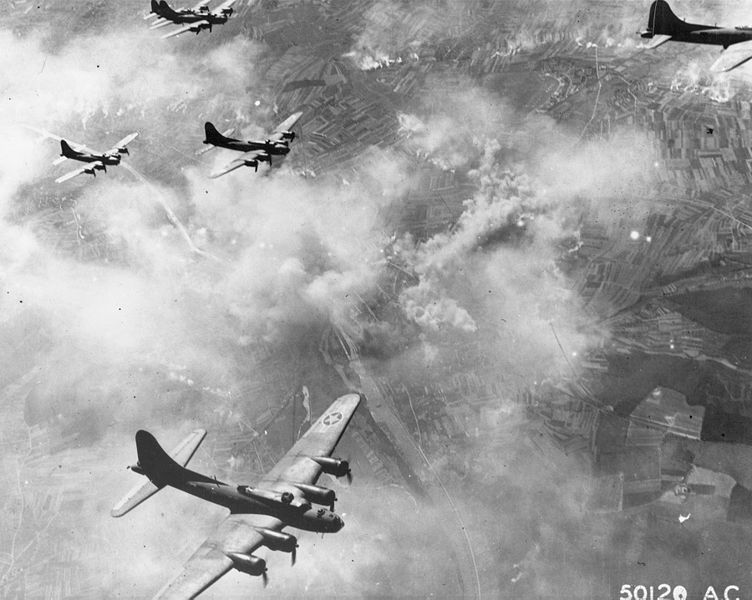
This story is based on an article by flight engineer Geoff Copeland, first published in the Tangmere Military Aviation Museum’s ‘Talking Tangmere’ magazine in autumn of 2001. This Schweinfurt raid was assessed as a failure due to poor low-level marking. Twenty one Lancasters were lost (nearly 10% of the force).
It was a long and lonely journey across France on the morning of 27 April 1944, returning from a raid on Schweinfurt. Our Lancaster, DX-J of No 57 Squadron, was in No 5 Group and stationed at East Kirby, Lincolnshire. We had had a rough time over the Bavarian Alps where we were hit by a Junkers Ju88 nightfighter with an upward firing cannon. Following the attack, we found ourselves in a screaming dive which required the joint efforts of the pilot and myself, the flight engineer, to get the aircraft back into some sort of control, all this without intercom which, with the radio, had been put out of action.
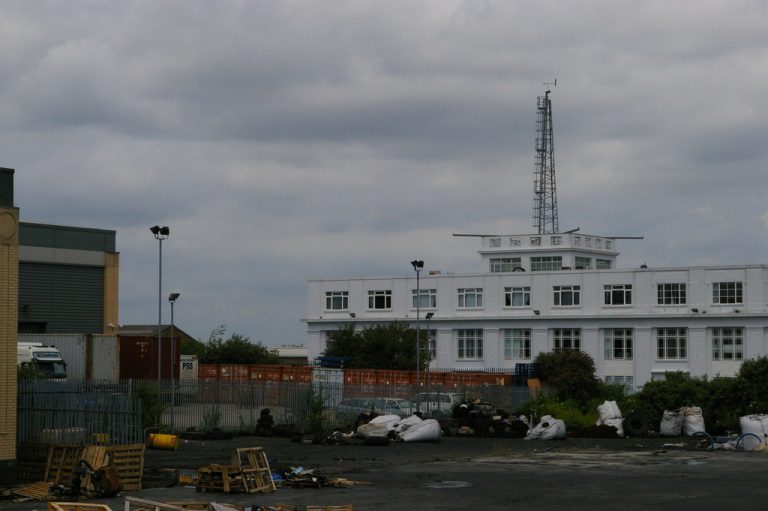
Checking on the state of the crew, I found that the mid-upper gunner had baled out, fearing the worst and the rear gunner had been severely wounded. We did our best for him and after crossing the Channel made for Tangmere, the nearest airfield. We had no means of communicating with Tangmere Tower by radio but their Flying Control was well used to bombers in trouble and we saw, as soon as we came in sight of the airfield, a green Very Light from the Tower, giving us permission to land.
Approaching to land, I checked that the emergency undercarriage system had worked and with hand signals, assisted the skipper in making our landing which was trouble free. We taxied in and stopped by the Tower, parking by another Lancaster from our squadron. Sadly, one of its gunners had been killed. The medics climbed aboard our Lancaster to attend to the rear gunner and he was soon taken from the aircraft and ambulanced to the Royal West Sussex Hospital in Chichester where one of his legs was later amputated.
To see what damage we had suffered, I walked along the top of the aircraft; the damaged was mainly at the rear of the fuselage with large shell holes above and below with smaller ones along the fuselage sides caused by our exploding ammunition. The lack of fabric on the elevators explained our loss of control.
In the absence of the skipper, more concerned about the rear gunner, I reported to the Tower to advise them who we were. Whilst there I watched another Lancaster making a wheels-up landing. A crane was on its way almost before it stopped in a cloud of dust on the grass. The Lancaster was swiftly hoisted onto tracked bogies and cleared away from the landing area. Soon after this another Lancaster appeared in the circuit, flying on two engines and slowly losing height. At the end of the downwind leg a third engine was feathered but somehow the pilot turned the aircraft safely onto final approach with only one of the port engines running. To everyone’s relief, he landed the aircraft successfully and it trundled to a stop on the runway.
Waiting for a lift home to East Kirby that afternoon, we watched a squadron of rocket armed Typhoons take off for a mission over France. Tangmere was back as a fighter airfield.