We are delighted to feature another guest post from David Coxon, Honorary Vice President of Tangmere Military Aviation Museum.
David writes:
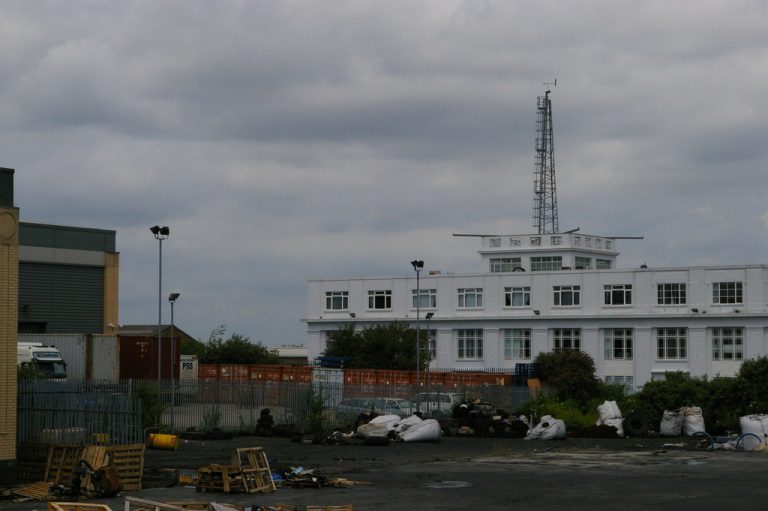
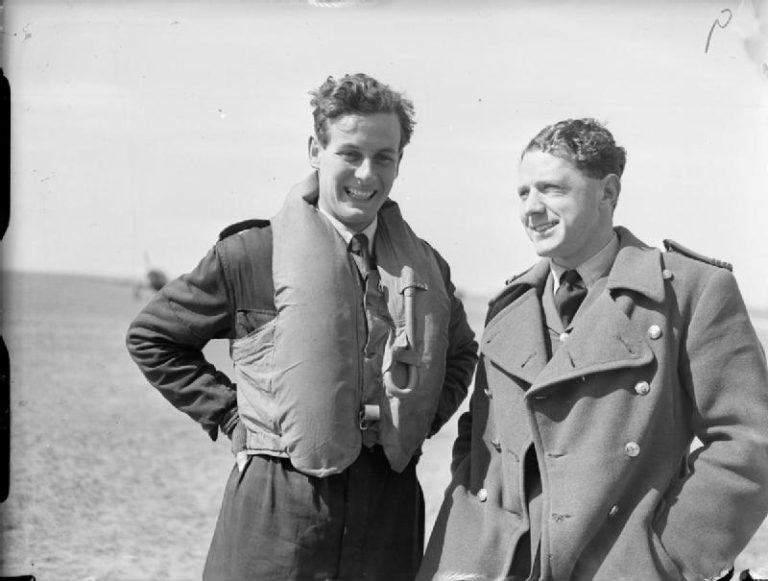
In 1941 a school was set up at RAF Tangmere to teach air traffic control (ATC) to trainee controllers who would be operating at Fighter Command airfields. Vincent Miller, a pre-war civilian Air Traffic Control Officer, was tasked with setting up the school on the airfield where two Spitfire squadrons (Nos 616 and 145) and a Beaufighter night fighter squadron (No 219) were based. Tangmere’s station commander, Group Captain ‘Woody’ Woodhall, supported this initiative to positively control aircraft at night and in poor weather conditions on and near the airfield. He was supported by his new Wing Commander (Flying), Douglas Bader, who had arrived in March 1941 to lead the Tangmere Spitfire Wing.
A link trainer was made available for Miller to develop instrument approach landing procedures and the school was quickly organised with a course based on the syllabus used at the pre-war civilian ATC School in Kensington, London. The first course was conducted by Colin Pryce, another pre-war civilian controller and consisted of three ex First World War pilots, two medically unfit pilots and several non-aircrew reserve officers. None of the course members had had any previous experience of controlling aircraft. Bader, having seen the value ‘control’ provided for the night fighter squadron, saw the benefits to be gained for day fighter pilots in poor weather conditions. He instructed his Wing day fighter pilots to accept instructions from airfield controllers and it was largely Bader’s foresight that Fighter Command came to accept controllers and their methods.
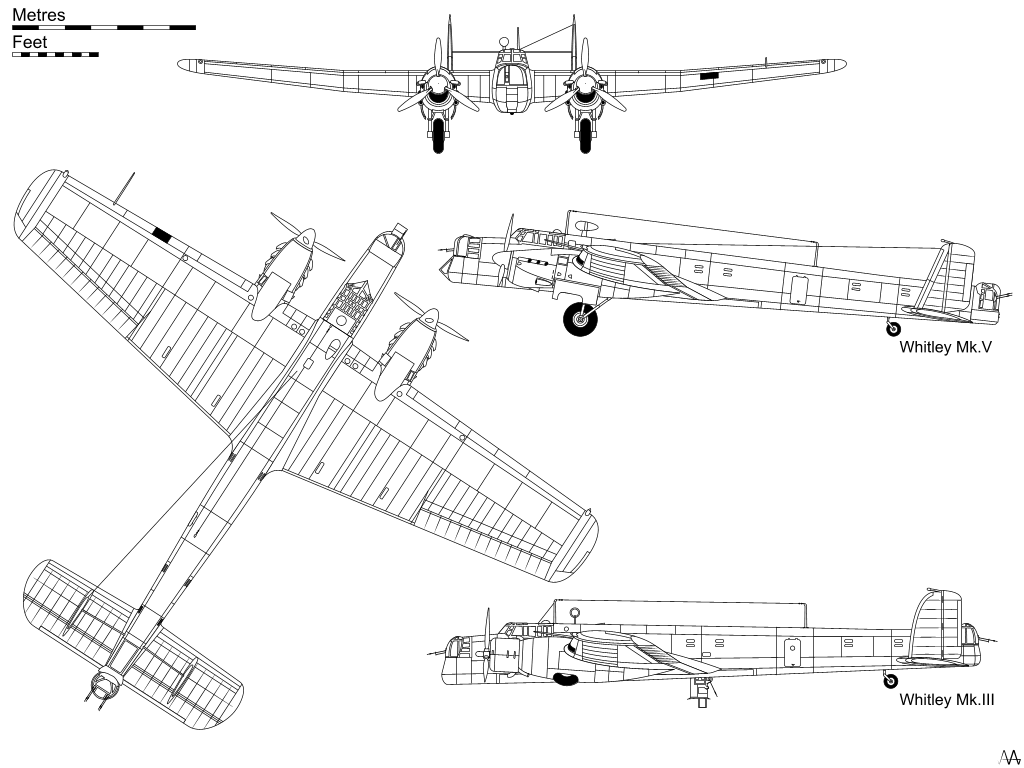
The value of Miller’s work on an instrument approach procedure, based on ground located direction finding equipment, was seen later in 1941 when Whitley bomber aircraft from No 77 Squadron had to divert to Tangmere following poor weather at their RAF Leeming base. All the Whitley aircraft carried out the procedure and landed safely. The benefit of instrument approach procedures in bad weather operations was quickly realised and as a result of Miller’s efforts controllers were established on other Fighter Command airfields. Night fighter stations were the first to receive trained controllers, followed by night Operational Training Units (OTUs) and finally day fighter airfields when equipment and staff became available.
In the summer of 1941 a Central Flying Control (CFC) was set up at High Wycombe, Bomber Command’s Head Quarters, to coordinate diversions for bomber aircraft returning from raids to find their airfields unavailable due bad weather. Diversion airfields now included those of Fighter Command. In September, Marshal of the RAF Sir John Salmond was appointed Director General of Flying Control and Air Sea Rescue. He quickly ordered the establishment of flying control liaison officers at all Fighter Command Group Head Quarters.
By the autumn of 1941 mid-air collisions were occurring around some Bomber Command airfields when arriving aircraft were circling overhead awaiting their turn to join the airfield circuit. It was decided, when the situation demanded, to hold arriving aircraft away from the airfield and to vertically separate them at different levels in a ‘stack’. Aircraft would then be stepped down by air traffic control after each lowest aircraft had been brought off the stack towards the airfield.
However, due to the continued night bombing of Tangmere, only two courses were conducted at the Fighter Command Control School on the airfield before it was moved to RAF West Malling. During one raid on Tangmere a bomb had demolished the building next to the school with falling masonry destroying a link trainer.
This article is based on the contents of a manuscript written by the late John Platt, a civilian air traffic controller, who, before his death, was pursuing a project on writing the history of ATC