We are delighted to feature another guest post from David Coxon, Honorary Vice President of Tangmere Military Aviation Museum.
David writes:
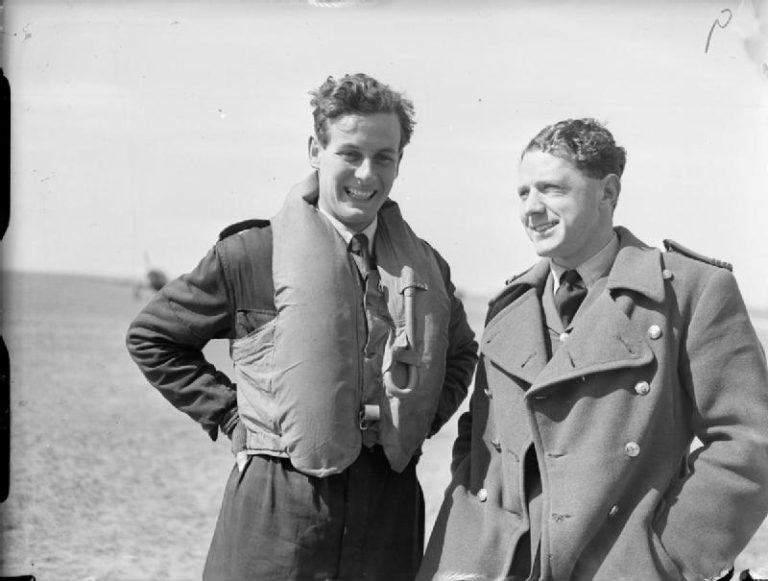
In Peter Townsend’s autobiography, ‘Time and Chance’, first published in 1978 by William Collins, Sons and Co. (now Harper Collins) he writes about his recollections of RAF Tangmere before the commencement of the Second World War. Townsend’s apprenticeship at RAF Cranwell culminated in 1935 with a posting to No 1 Fighter Squadron, one of the RAF’s three crack interceptor squadrons.
He recalled that as interceptor squadrons, Tangmere’s Nos1 and 43 were the élite troops, the first to be thrown against the enemy in the event an attack, climbing steeply and rapidly to intercept the first wave of bombers. Just how to find them, nobody knew. Radio communication and direction finding were still in the folkloric stage. In the 1930s there was no Air Traffic Control to assist pilots in navigating their way to Tangmere. Radio ‘homing’ was available but fighter pilots more often trusted their own instincts rather than the uncertain technique of a ground station. The favoured method was to ‘Bradshaw’ (so-called after the railway time-table); you followed roads and railway lines, flying low enough, when necessary, to read the name-boards on the stations.
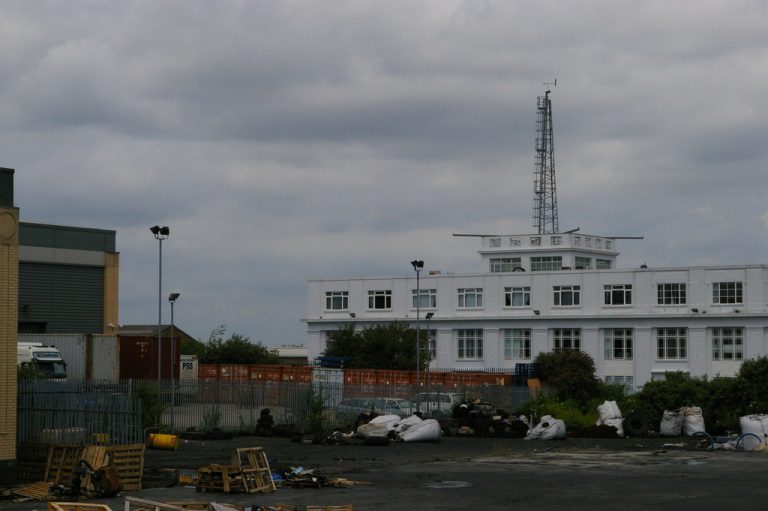
At Tangmere, the black ball indicating ‘no flying’ was automatically hoisted when clouds covered the South Downs. If the weather clamped down while pilots were north of the Downs, the standard approach to Tangmere was to fly ‘on the deck’ down the London- Arundel railway, through the Arundel Gap in the hills, turning right to Barnham Junction and there, right again and count sixty. Unfailingly, Tangmere then loomed out of the murk. Their make-shift methods of navigation and interception were soon to be replaced by scientific ones – some way from Tangmere, at Polegate, huge lattice masts were being erected – sinister sentinels in a forbidden war. They were an unmentionable secret; this was a big step forward, Radio Direction Finding (RDF) later to be called Radar.
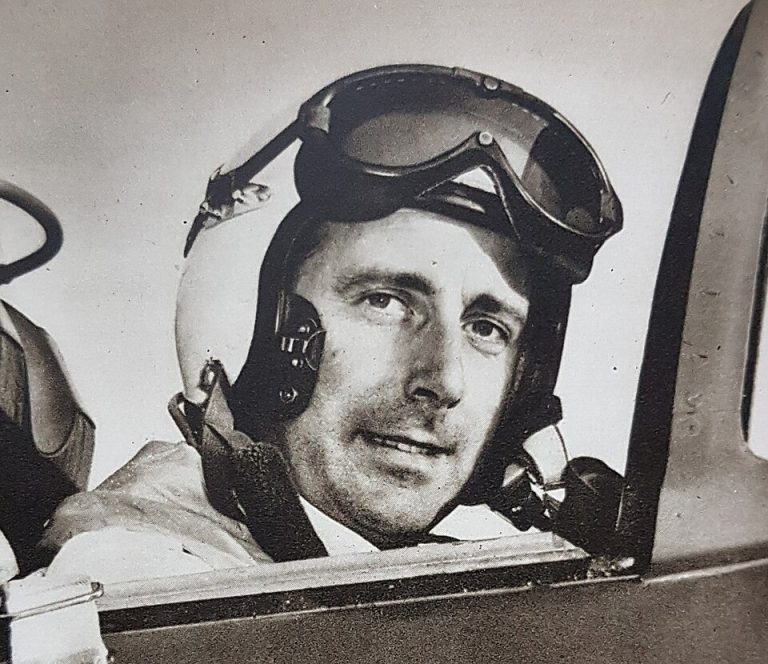
Post War, twenty years later, No 1 Squadron was still based at RAF Tangmere and equipped with the Hawker Hunter F5, Armstrong Siddeley Sapphire powered jet fighter aircraft. Flying Officer Gerry English, one of the Hunter pilots at that time, recalled the ‘Barnham Junction Approach’ in bad weather. “One flew below cloud at perhaps 200 feet over the Channel and somehow found the Pier off Bognor Regis, the railway line out of Bognor was then followed for four miles to Barnham Railway Station. Lowering the landing gear a a rate one turn was made onto 250 degrees and there ahead was Tangmere’s runway 25. Just as well since the fuel reserves of the Hunter were pretty minimal”.
Peter Townsend later made his name in the war when commanding No 85 (Hurricane) Squadron. Awarded the DSO and DFC and Bar, he was later promoted group captain and appointed equerry to the King in 1944. He died in June 1995. Gerry English’s account is taken from the book ‘Number One in War and Peace – the History of No 1 Squadron, 1912-2000’, (Norman Franks and Mike O’Connor) published by Grub Street in 2000.