We are delighted to feature another guest post from David Coxon, Honorary Vice President of Tangmere Military Aviation Museum.
David writes:
This article, based on a letter sent to the Tangmere Military Aviation Museum by Daphne Ollie, was published in the Museum’s magazine ‘Tangmere Logbook’ in 2011
Daphne Ollie was 14 years old when war broke out in 1940. She decided, when approaching 17, that she wanted to join the Women’s Auxiliary Air Force (WAAF). Although not old enough to sign up, she was keen and decided to volunteer anyway. The first documents she was asked for when reporting to Bridgenorth in Shropshire, were her Birth Certificate and ID card. She could not provide any ID because she had recently had had her handbag stolen in Surrey. Fortunately she had reported the theft and after a check was made with the Richmond Police she was accepted – no check was ever made on her Birth Certificate.
After negotiating signing-up, she was determined to get on a radio telephony course which appeared to be reserved for well-educated grammar school types. She lied about her school, saying she had been to Southend High School for Girls and was sent to see the Signals Officer who said they were short of radio telephony (RT) operators. She could hardly believe her luck and after six weeks of square-bashing she was sent to RAF Cranwell for a three month course in radio telephony. She passed out top of her course and was automatically promoted Leading Aircraft Woman, LACW.
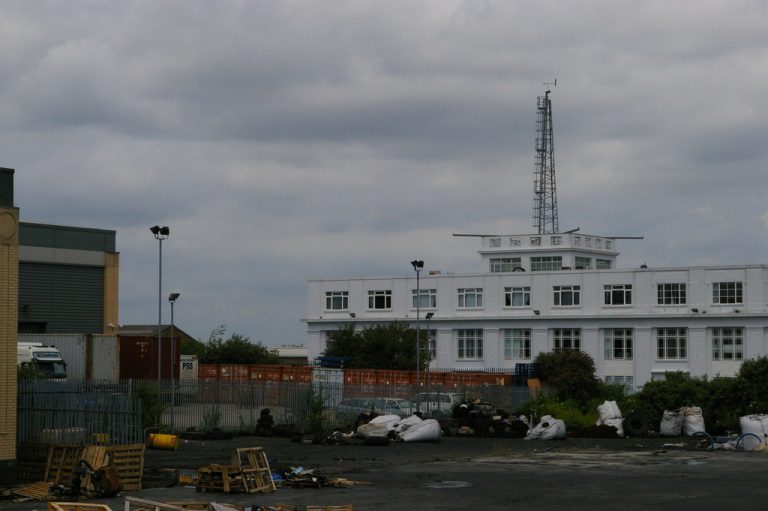
She was posted to Tangmere and as a trained RT operator and her first job was at Flying Control in the control tower. Here the RT operators sat in small sound-proof cubicles with a little hatch through into the control room. They had to log every word that was said over the RT from ground-to-air and air-to-air. The language could be ‘blue’ at times and when this occurred the operators logged the transmission as ‘Polish’ – there was a Polish squadron based at Tangmere during her time there. The logs were sometimes taken away to confirm pilot claims. She described her work as exciting but sometimes very sad. One of her colleagues was in tears when she had to listen to a pilot saying the Lord’s Prayer as he went down.
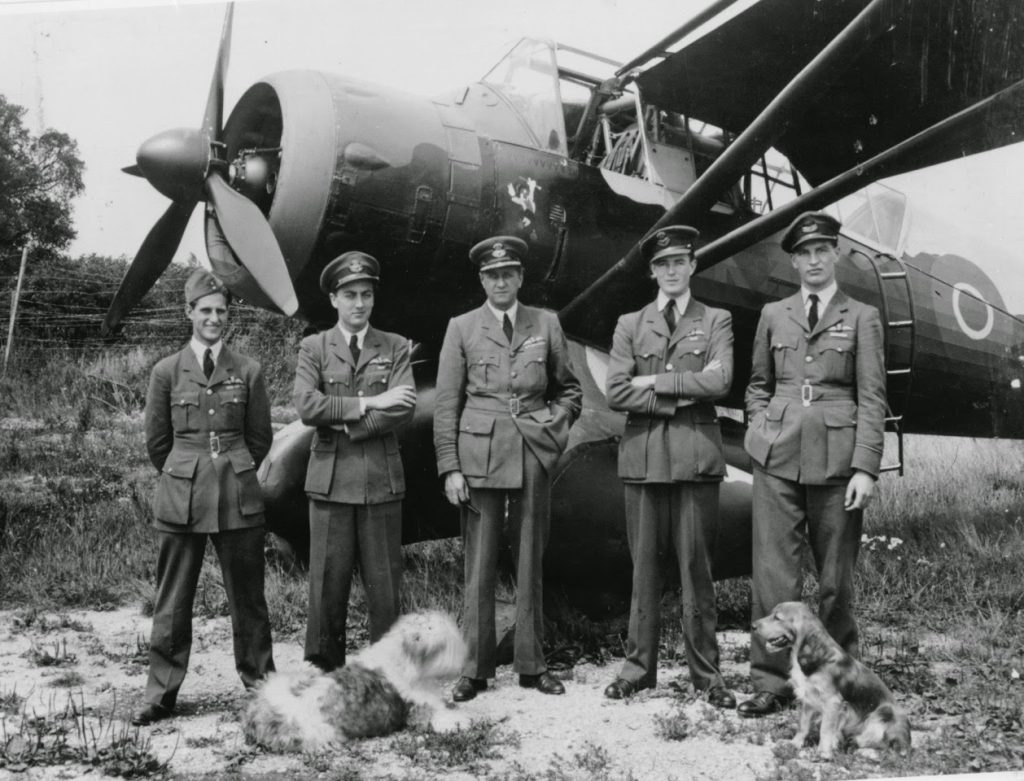
After some time at Flying Control Daphne was transferred to Tangmere’s Homer Direction Finding (D/F) Station. The ‘Homer’ was located in a field outside the airfield and in-line with the main runway. To access the site the staff had to cycle round the perimeter track and into an adjacent field which Daphne found at night lonely and creepy. The D/F aerial was situated just under the roof, accessible by a ladder through the ceiling and in the room below was a receiver with a large calibrated wheel. An open line connected the Homer Station to Flying Control. Bearings of aircraft transmitting were passed to Flying Control who passed vectors to the pilots to bring them overhead the airfield. The radio channel being monitored by the Homer D/F team was only available to aircraft requiring navigational assistance to the airfield including those in an emergency but was also used by the ‘Moon Men’, No 161 Squadron Lysander and Hudson pilots on pick-up operations. When inbound to Tangmere after carrying out their clandestine missions the pilots would, on crossing the Channel, call ‘Postgirl’ on the Homer frequency for a vector to overhead the airfield and would usually indicate as to whether the operation had been successful. Days of the week indicated success, numbers meant failure. Flying Control would pass the message on to the waiting No 161 Squadron staff located at Tangmere Cottage, opposite the airfield’s main entrance. As she cycled around the perimeter track to the Homer Station, Daphne would, on seeing the black painted Lysanders, know that the night ahead would be interesting. On one occasion she heard only very faint transmissions but realising the Lysanders were operating that night passed the bearings to Flying Control who did not believe her and did not transmit the vectors to the aircraft. Only when the aircraft called with its callsign was Daphne believed. The Lysander landed safely and the controller in Flying Control rang to apologise. The telephone was passed to her by a clerk who said, “He wants to speak to the girl with the golden voice”.