We are delighted to feature another guest post from David Coxon, Honorary Vice President of Tangmere Military Aviation Museum. This post is another perspective on the same topic as our post Espionage cooking: Où est le garlic?
David writes:
On the night of 26/27 October 1942 Pilot Officer John Bridger, a Lysander pick-up pilot with No 161 (Special Duties) Squadron, took-off from RAF Tangmere with two agents in the rear cockpit; Mary Lindell (Comtesse de Milleville) and wireless operator Ferdinand Rodriguez. Mary Lindell, aged 47, had been recruited by MI9 during the summer of 1942 and was trained by Airey Neave to run an escape and evasion line in occupied France. Bridger’s target field was code named ‘Thalamy’ and was located at Ussel, a village south of Paris and west of Clermont Ferrand.
After a long flight Bridger found the target field’s flarepath, lit unusually by solid fuel and not by the usual flash lamps held by the Resistance members. One of their members, Pierre Dallas, had been detailed to bring the flash lamps to the field but had fallen asleep on a train and missed the stop at Ussel railway station. After Lindell and Rodriguez had stepped down from the Lysander and left the field two large full sacks were loaded into the passenger cockpit and Bridger took-off on his return flight to Tangmere.
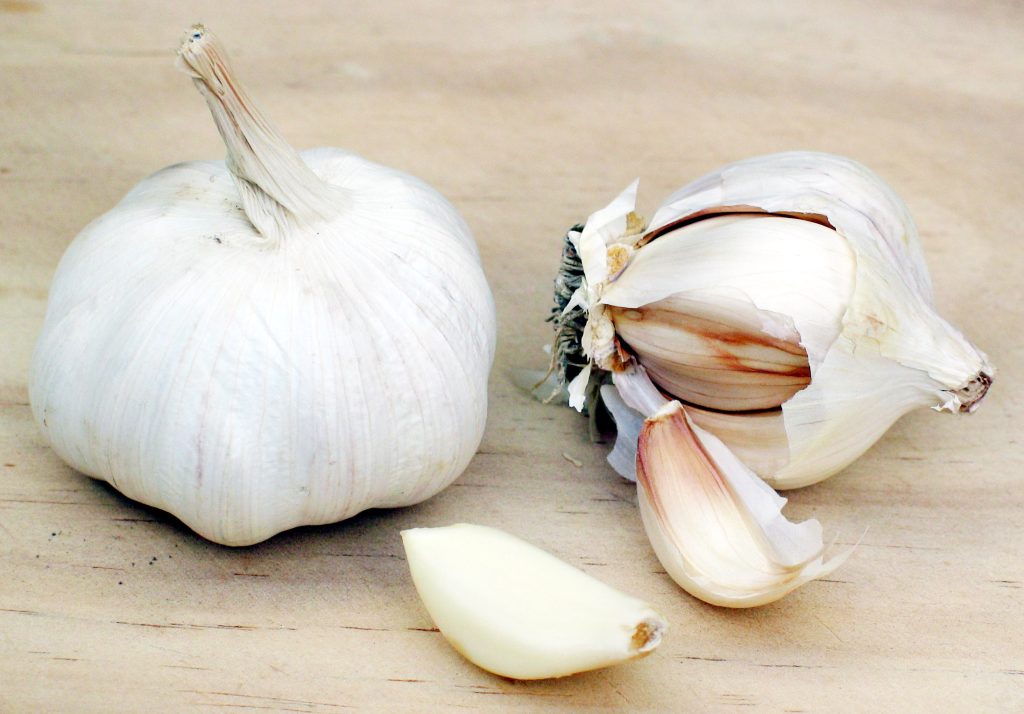
But what was in the sacks? Earlier in 1942 British Intelligence had been contacted by members of the Free French organisation in London who asked if it would be possible to bring back garlic from France for members of the French navy based on the Isle of Wight. They claimed they couldn’t fight unless they could cook with garlic! The two sacks brought back by Bridger contained garlic bulbs which found their way to Bill Spidy, landlord of the Painter’s Arms in the middle of Cowes on the Isle of Wight. Bill administered the local gardening club and decided to cultivate the garlic on his farm for the French sailors.
The growing conditions proved ideal due to the well balanced chalky soil, high light intensity and unique climate on the island. Since the war, despite its reputation as a French cooking staple, Britain now consumes more garlic than its French neighbours, much of it produced on the Isle of Wight, the variety being called ‘Solent Wight’. Each year a Garlic Festival is held on the island attracting more than 25,000 visitors.
John Bridges survived his tour with No 161 Squadron and at the end of 1943 was posted to fly Halifax bombers with Bomber Command’s No 4 Group. Sadly, after the war he was killed when a modified Avro Tudor aircraft crashed in April 1959 on Mt Süphan, Turkey. Airey Neave had escaped from Colditz Castle in early 1942, became a MI9 Intelligence Officer and after the war went into politics and was appointed Shadow Secretary of State for Northern Island. In March 1979 he was assassinated in the Palace of Westminster by the Irish National Liberation Army who planted a bomb under his car. Mary Lindell, the Comtesse de Milleville, set up the Marie-Clair escape line based in Ruffec, southwestern France. In November 1943 she was arrested and was shot whilst trying to escape but survived. She was transported to Ravensbrück Concentration Camp but survived and died in France in 1987.